
OUR ORGANIZATION
AAP Organogram
The organizational structure of Action Against Poverty (AAP) is designed to promote transparency, accountability, and effective decision-making while ensuring strong connections with communities at the grassroots level. At the top of the structure stands the Annual General Meeting (AGM), which serves as the supreme governing body responsible for approving policies, reviewing organizational performance, and electing the Board of Directors.
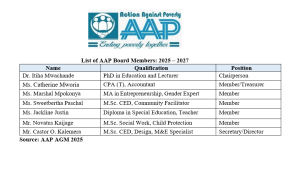
The Board of Directors provides strategic guidance and oversight, ensuring that all activities remain aligned with AAP’s mission and vision. For the 2025–2027 term, the Board is composed of Dr. Ithiha Mwacande, who serves as Chairperson; Ms. Catherine Mworia, who serves as Member and Treasurer; Ms. Marshal Mpokonya, a Gender Expert and Member; Ms. Sweetbertha Paschal, a Community Facilitator and Member; Ms. Jackline Justin, a Teacher specializing in Special Education and Member; Mr. Novatus Kaijage, a Social Work and Child Protection Specialist and Member; and Mr. Castor O. Kalemera, who serves as Secretary and Director with expertise in Community Economic Development, Design, and Monitoring and Evaluation.
Beneath the Board, the Executive Director acts as the chief executive officer of AAP, tasked with leading daily operations, implementing Board directives, and linking leadership decisions to program implementation. The Executive Director coordinates and oversees the organization’s various departments, which focus on economic empowerment, community development, health, peace, and governance. These departments ensure that AAP’s interventions are well-structured and impactful, directly addressing the needs of vulnerable groups.
At the foundation of the organogram are AAP’s volunteers and field officers, who play a vital role in program delivery. They engage directly with communities, ensuring meaningful participation, sustainable outcomes, and the effective translation of AAP’s mission into real-life impact.
This structure, flowing from the AGM to the Board of Directors, then to the Executive Director, program departments, and finally to volunteers and communities, strengthens institutional capacity, improves accountability, and fosters the inclusion, empowerment, and sustainable development of vulnerable populations across Tanzania.